
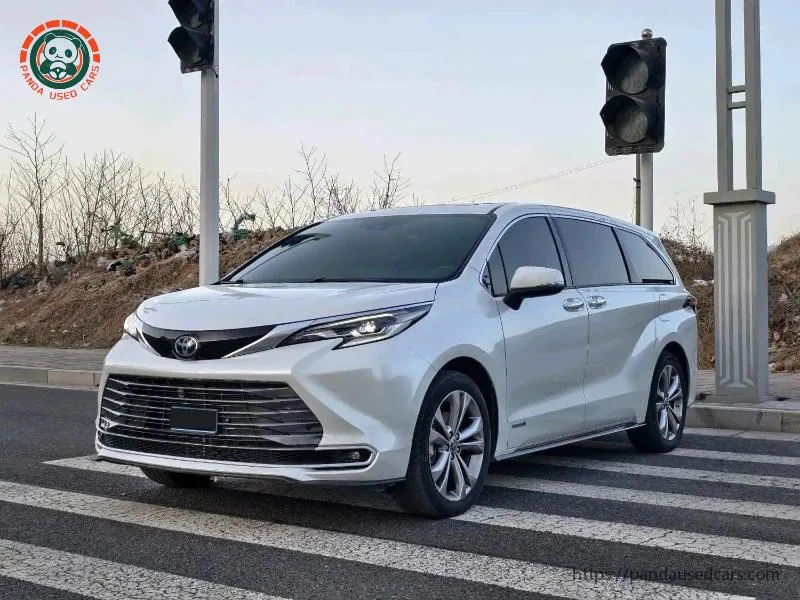
Identify the two actual powertrain generations
Collect VIN, production information, legal year, original market and installed engine or hybrid records for both offers. The generation guide keeps a model name from obscuring material differences. This comparison concerns an actual older V6 offer, not a claim that every earlier Sienna has the same engine. Current US-market fourth-generation information describes a hybrid lineup; it cannot establish every vehicle carrying a recent registration date. Keep appearance as supporting evidence only. If identity is inconsistent, resolve the record before comparing fuel assumptions or local service familiarity. A similar body colour or seller’s translated description does not establish an equivalent candidate.
Apply the same passenger and journey brief
Define actual occupants, restraints, boarding sequence, luggage, parking and ordinary route length. A cheaper older van and a newer hybrid may have different seating hardware and useful functions, so compare practical fit rather than assuming both satisfy the task because they are minivans. The family-space review keeps occupied loading beside generation choice. Retain necessary conveniences, not every optional feature in a brochure. If one offer has an untested cabin or unsupported regional service, describe that evidence limit. The powertrain decision should not hide a seating or access failure that makes an otherwise attractive fuel or acquisition argument irrelevant to the intended household.
Examine each powertrain on its applicable scope
Arrange suitable current findings for the actual system rather than using one checklist identically on both vehicles. Hybrid pack, thermal and control questions differ from applicable older engine, transmission and cooling assessment. The hybrid-battery guide contributes to the newer offer without declaring a single reported value sufficient. Retain attributable history, conditions, warning state and examination limits on both candidates. A smooth short drive cannot guarantee remaining life, and a vehicle without disclosed intervention is not automatically better documented. Further consequential diagnosis remains an acceptance issue before an apparent saving becomes the main reason to overlook incomplete condition evidence.
Verify receiving support without relying on reputation
Ask actual providers what identification, diagnosis and parts scope they can support for each generation and original market. The maintenance and parts review distinguishes familiarity with a name from usable installed-system support. A workshop experienced with older Toyota engines may not support the particular hybrid configuration, while hybrid familiarity does not prove every imported body or cabin part is readily available. Obtain actual quotations or limits where appropriate. Do not assume domestic warranties transfer abroad or that all age-related work is inevitable. Keep practical service access, part lead-time uncertainty and interruption needs beside the owner’s actual journey requirements.
Compare acquisition with labelled operating scenarios
Put vehicle price, examination, preparation and destination tasks at an equivalent buyer-ready boundary. The price guide prevents the lower older-V6 ask being treated as the complete saving. Use real duty and clearly labelled fuel-price and consumption assumptions through the fuel-use guide. Do not transfer one market’s economy rating into every route or promise a fixed hybrid payback. The three-year ownership worksheet separates attributable starting expenditure from future servicing and resale scenarios. Count completed included work once. Retain unpriced consequential condition questions outside the arithmetic rather than claiming a precise total clears the candidate.
Choose the supported offer and retain its limits
Record selected generation, installed powertrain, practical cabin fit, current findings, usable support and the reason for the prepared difference in the purchase equipment schedule. A hybrid premium can be justified by useful supported operation on this duty, while a well-evidenced older offer may meet another buyer’s task coherently. Neither conclusion is universal. If the VIN or destination changes, update the relevant comparison before relying on the old result. Preserve any required completion checks and commercial exclusions. The decision should remain defensible without guaranteed fuel savings, speculative resale value or a reputation-based claim that the chosen generation needs no further examination.
Compare the acceptance conditions
- Hybrid case
- Value verified useful operation with adequate current evidence and receiving support.
- Older V6 case
- Compare accepted condition and complete preparation, not the low ask alone.
- Incomplete choice
- Resolve identity, condition and necessary support before calculating a confident saving.
Buyer evidence checklist
- Identify both actual generations and markets.
- Use one passenger and occupied-loading brief.
- Apply suitable current powertrain examinations.
- Confirm usable receiving support for each offer.
- Keep future fuel and resale scenarios explicitly assumed.
Questions before you buy
Will hybrid fuel savings always repay its premium?
No universal payback applies across purchase prices, routes, use and market versions.
Does an older Sienna reputation establish present condition?
No. Actual history and appropriate candidate-specific examination remain necessary.